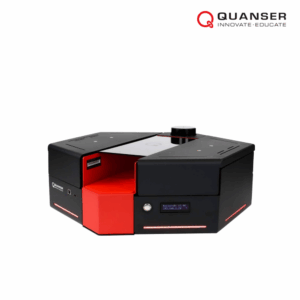
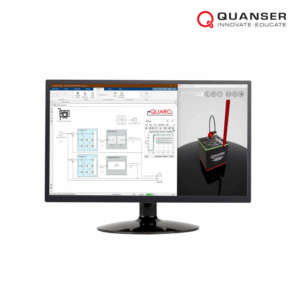
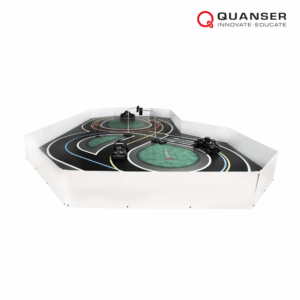
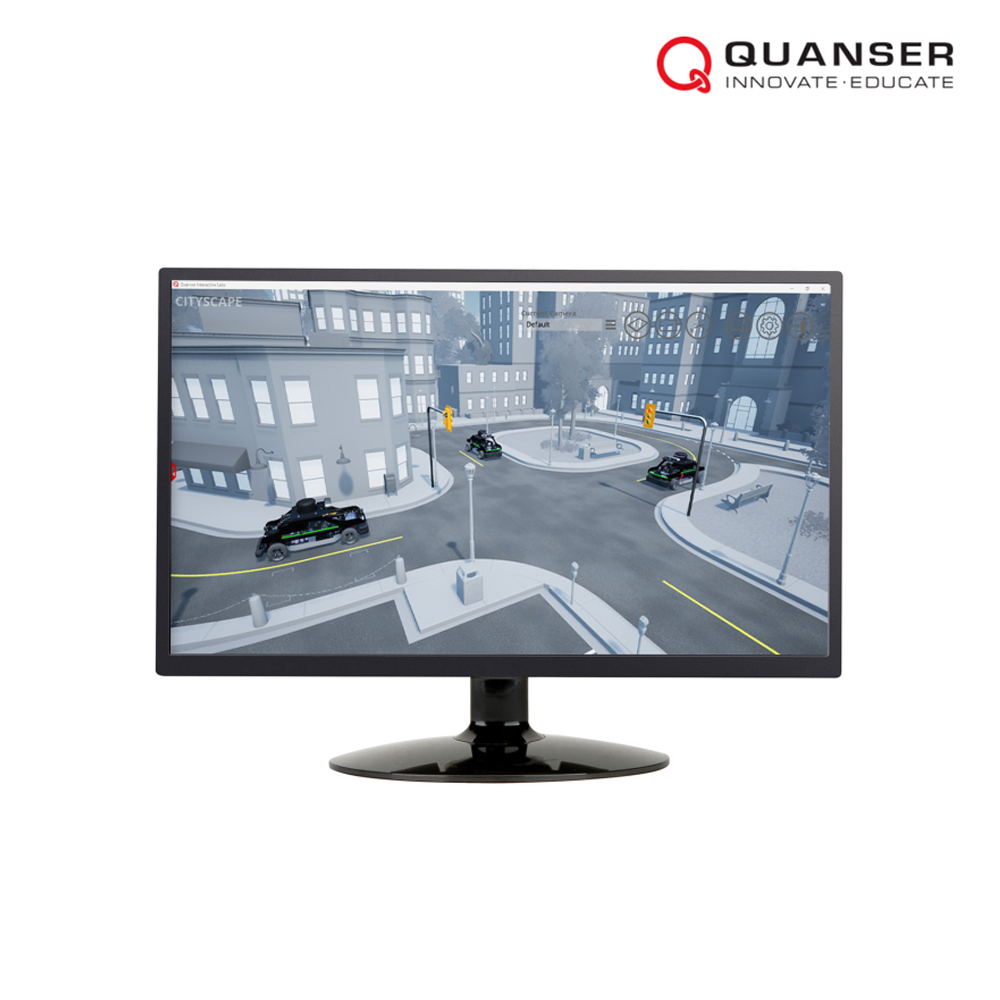
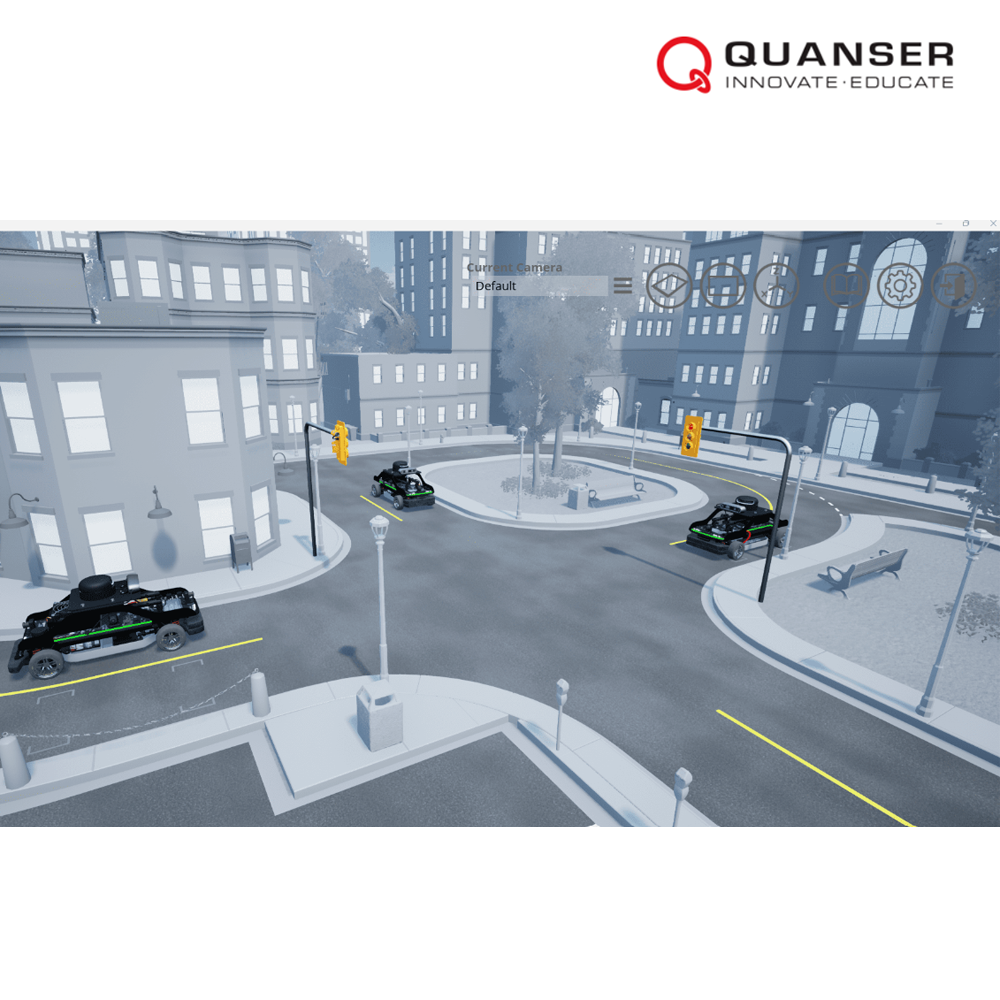
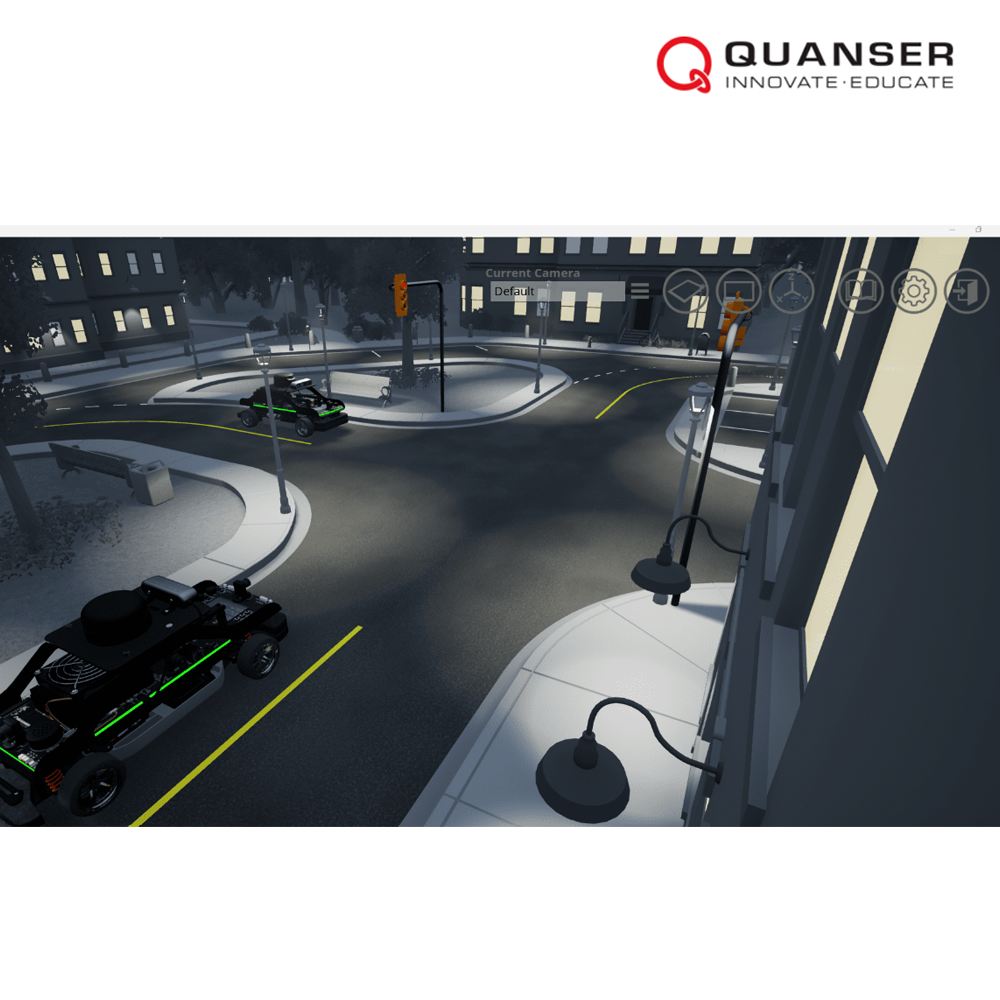
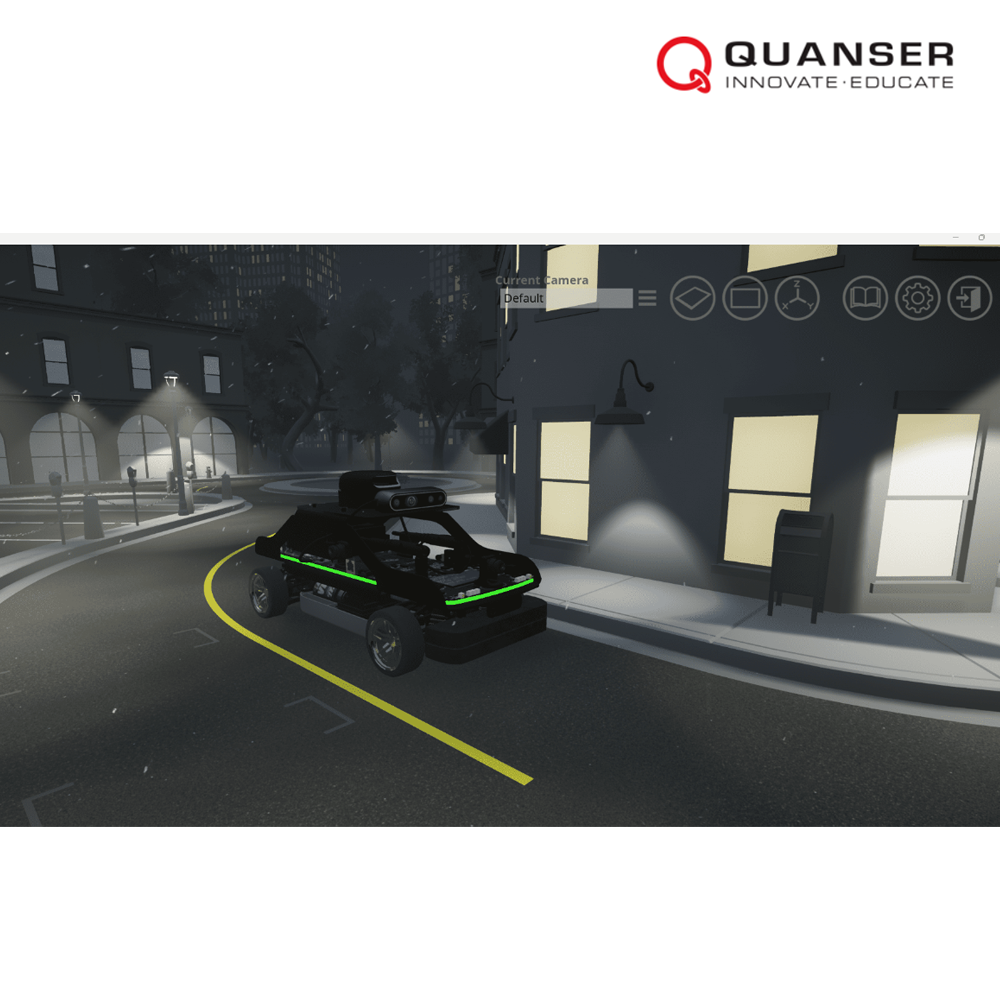
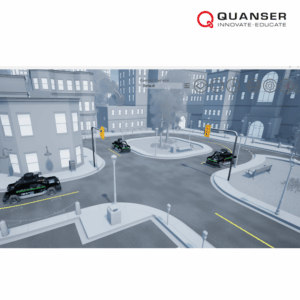
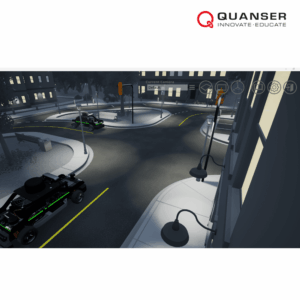
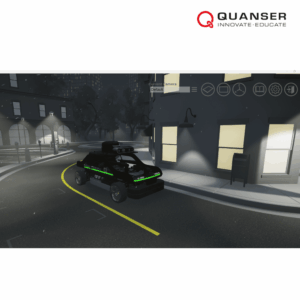
The Quanser Virtual QCar 2 is a fully instrumented, dynamically accurate digital twin of the physical QCar 2 1/10 scale self-driving car. It behaves the same way as the physical hardware and can be measured and controlled using MATLAB Simulink® or Python development environments. It can enrich your lectures and activities in traditional labs, or bring credible, authentic model-based lab experiences into your distance and online self-driving courses.
Same as the physical Qcar, the virtual system is a self-driving teaching and research platform complete with industrially relevant sensors such as LiDAR, 360° CSI cameras, an RGB-D camera, and inertial and odometric sensors.
The Quanser Virtual QCar 2 is a fully instrumented, dynamically accurate digital twin of the physical QCar 2 1/10 scale self-driving car. It behaves the same way as the physical hardware and can be measured and controlled using MATLAB Simulink® or Python development environments. It can enrich your lectures and activities in traditional labs, or bring credible, authentic model-based lab experiences into your distance and online self-driving courses.
Same as the physical Qcar, the virtual system is a self-driving teaching and research platform complete with industrially relevant sensors such as LiDAR, 360° CSI cameras, an RGB-D camera, and inertial and odometric sensors.
• Academically appropriate
High-fidelity, credible lab experiences equivalent to using the physical lab equipment
• Comprehensive Resources
Innovative curriculum and research resources
• Open Access
Full access to the system through MATLAB Simulink® or PythonTM
• Scalable
12-month multi-seat subscription
• Sensor interfacing and kinematic modeling
• Occupancy grid mapping
• Sensor fusion
• Vehicle lateral and longitudinal control
• Image acquisition and camera interfacing
• Line detection
• Lane detection and keeping
• Object detection and classification